Mera Peak 6476 m
Mera Peak 6476 m
Group tour
Overview
Mera Peak Climbing is one of the most iconic and delightful expeditions in the Himalayas that takes you to the summit of the highest trekking peak in Nepal. This beautiful hidden gem in the Himalayas which has been gaining massive popularity among climbers in recent years consists of three peaks, Mera South at 6,065 meters (19,898 feet), Mera North at 6,476 meters (21,246 feet) and Mera Central at 6,461 meters (21,197 feet).
Famous as the ‘practice peak’ of the Himalayas, the Mera Peak climbing offers an exhilarating and thrilling adventure for both beginner and seasoned climbers. Known for its straightforward climbing route and the unprecedented magical vistas of the Himalayas from the top, Climbing Mera Peak rewards the climbers with stunning views of the five of the highest peaks in the world, Makalu, Kanchenjunga, Cho Oyu, Lhotse, and Everest from its summit.
Whether you are a mountaineering enthusiast who has just started your climbing expedition or seasonal and veteran climbers with significant years of experience. We here at Peak Climbing Nepal offer the best fully guided package for the Mera Peak climbing that uplifts your mountaineering experience to a whole new level.
Highlights
Journey to the summit of the highest trekking peak in Nepal, Mera Peak (6,461 meters)
Unique and immersive exploration of both Hinku Valley and Khumbu Valley
Straightforward climbing experience for beginner mountaineers to test their skills and gain experience
Stunning views of the 5 of the highest peaks in the world from the summit (Makalu, Kanchenjunga, Cho Oyu, Lhotse, and Everest)
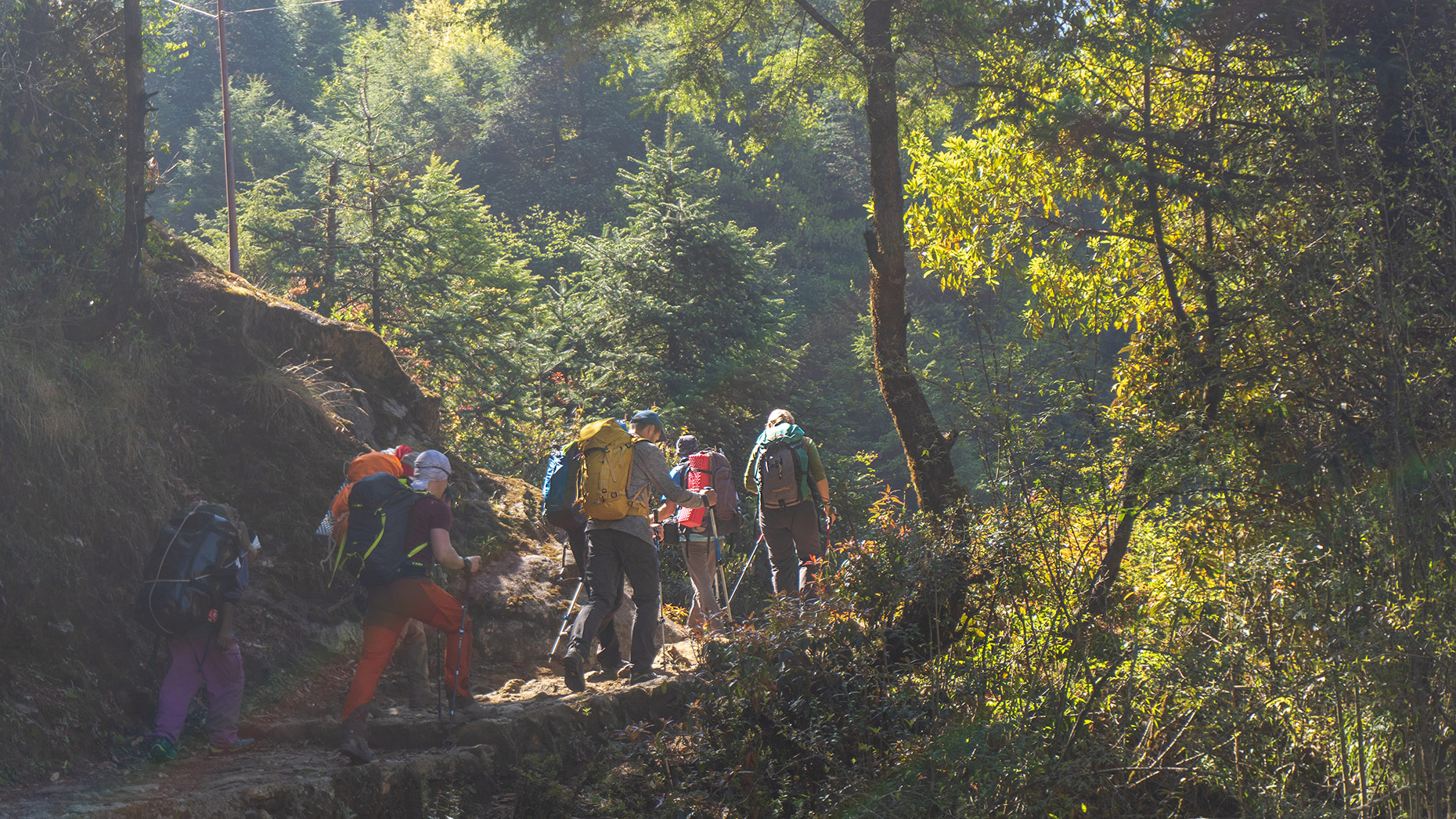
Remote charming trails with lush rhododendron, pine, and fir forest, scenic waterfalls, rivers, and wide pasture lands with clear Himalayan vistas
Delightful trekking trail passing through rich cultural and traditional settlements influenced by the Tibetan and Buddhist culture
Opportunity to explore one of the highest Himalayan passes in the region, Zatrawal Pass (4,600 meters)
Day-by-day Itinerary
Day 1 Arrival at Kathmandu Airport, transfer to hotel, check-in.
Day 2 Preparation for the route in Kathmandu. We prepare all the equipment, pack it into a bag, and check that anything missing can be purchased in Kathmandu.
Day 3 Flight to Lukla (2,845 m) and trek to Chutanga (3,450 m + 715 m). We arrive in Lukla, hand over our luggage to the porters, and set off with light backpacks. We check into a lodge, which will be the most basic lodge on the route.
Day 4 Trek from Chutanga via the Chatra La pass (4,610 m +1,550 m) to Thuli Kharka. In my opinion, this is the most difficult part of the trek. There is a large elevation gain on the second day of the trek. But the incredible beauty of the views makes up for it!
Day 5 Trek from Thuli Kharka to Kote (3,605 m -295 m). The long descent over rocks will be a little tiring, but after that, everything is moderate.
Day 6 Trek from Kote to Thangnak (4,350 m +745 m). The easiest day of the trek, a gradual climb, and we will visit a small Buddhist temple along the way.
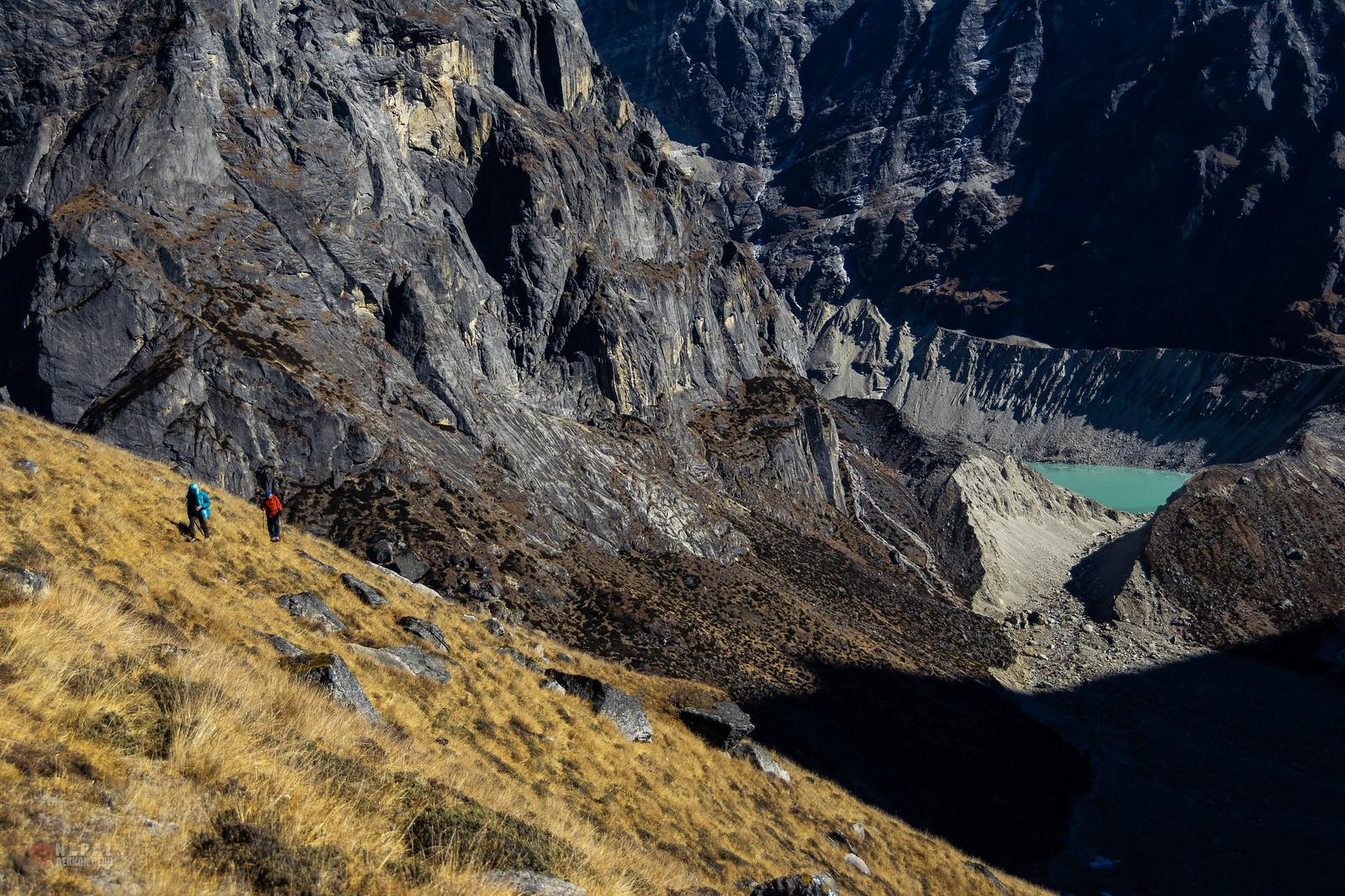
Day 7 Trek from Thangnak to Khare (5,054 m +704 m). On the way, we will visit a beautiful lake. We arrive in Khare, the last base lodge. We will spend a total of 3 days there.
Day 8 Rest and acclimatization in Khare (mountaineering classes). We will make an acclimatization trip towards Haig Camp. Depending on the condition of the route, we may need systems, crampons, rope, and ice axes.
Day 9 Trek from Khare to Haig Camp. Base camp before climbing Mera Peak (5,790 m +736 m). The trek takes 6-7 hours. Porters carry all the necessary equipment to the top. At the base camp, we stay in tents in pairs. Food and boiling water are available at the top. We travel light.
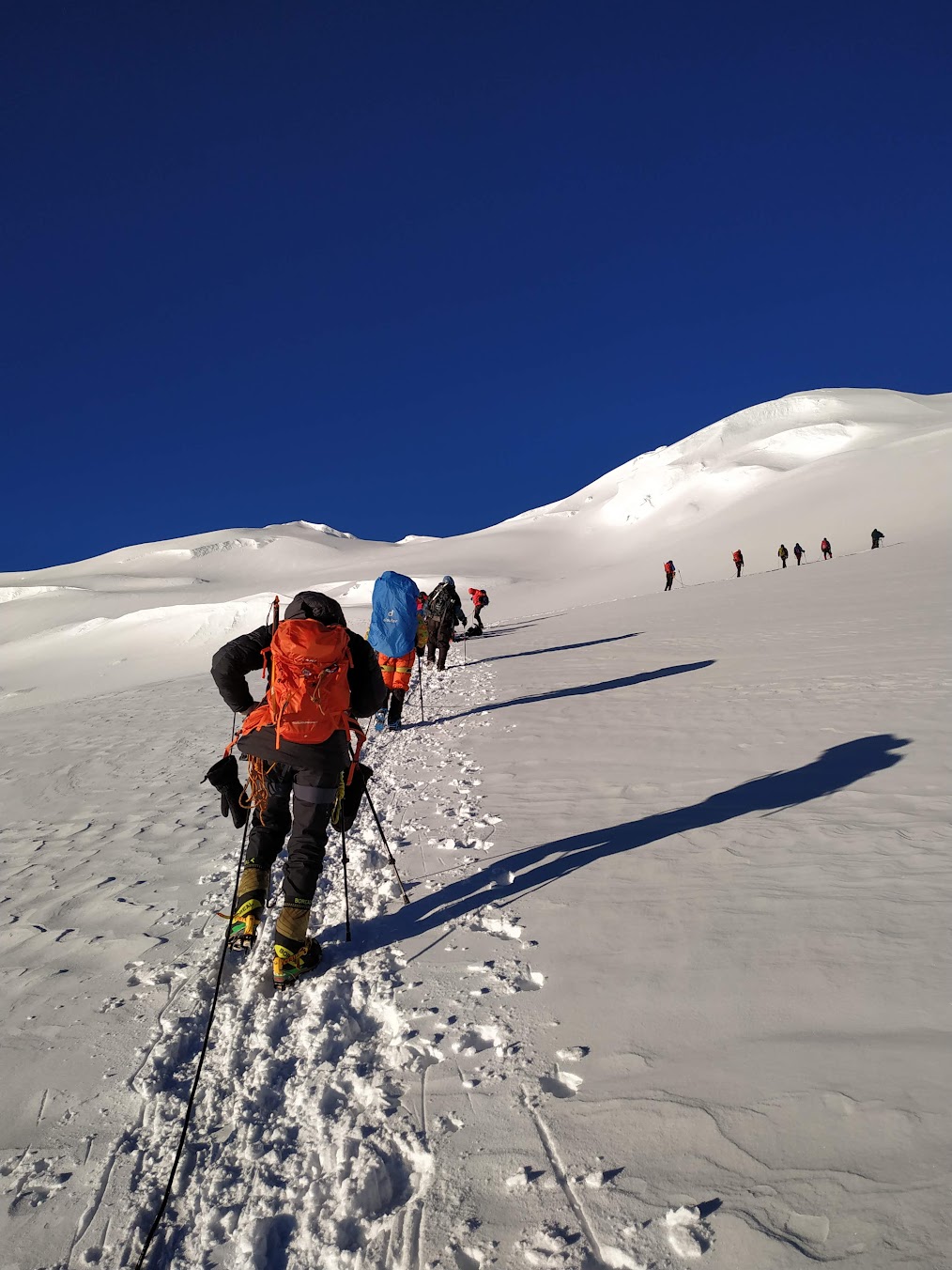
Day 10 Ascent to the summit of Mera Peak (6,476 m +686 m) and descent back to Khare (5,400 m -1,422 m). Early departure at 2 or 3 a.m. The ascent to the summit takes 5-6 hours. The climb is not difficult, the route is simple. The views are fantastic.
Day 11 Trek from Khare to Kote (3,605 m -1,449 m)
Day 12 Trek from Kote to Thuli Kharka (3,900 m +295 m)
Day 14 Trek from Thuli Kharka to Lukla (2,845 m -1,055 m)
Day 15 Flight to Kathmandu (1,350 m)
Day 16 Flight from Kathmandu home
!!! It is advisable to allow for an extra day in Kathmandu.
The program may be adjusted depending on the weather. It is better to arrive in Kathmandu early in the morning so that we don’t waste the day. Due to the unstable weather in Lukla, flights may be postponed. Therefore, it is better to fly there by helicopter. The helicopter costs $600 per person, and the return flight costs $250 per person.
The mountain is not technically difficult. It is considered one of the easier high mountains. The mountain offers spectacular views of several eight-thousanders.
The price of the tour is $2188
Best Season
The most ideal season for Mera Peak Climbing is considered to be the peak seasons like spring (March to May) and autumn (September to November). Both of these seasons are known for their stable weather, warm climatic conditions, and dry trails which are ideal for every kind of outdoor adventure.
However, both of these seasons have particular highlight points that charm travelers. The spring season in particular is known as the blooming season in the Himlayas that covers the lower trekking trails with colorful wildflowers. The bright colorful varieties of the rhododendron flowers and their sweet fragrance as well as the opportunity to witness the endangered high Himlayan wildlife in the spring season make the trekking a delightful experience.
The temperature of the Mera region during the springtime is usually around 15°C to 20°C, but you can expect the temperature to drop to -8°C during the morning and nights at the higher altitude. Similarly, the autumn season is known for the most stunning and clear views of the Himlayan vistas.
During the autumn season, the temperature of the Mera region is at a moderate level, the landscapes washed by the monsoon rain are super fresh and the waterfalls and rivers nourished by the monsoon rain are at their pinnacle. The autumn season is also known as the festive season in Nepal which celebrates some of the grandest festivals in the country like Dashain, Tihar, and Chhath.
So the exploration prospects during this peak season is unparalleled to any other season making it the top choice among climber and trekkers. The temperature of the Mera region during the autumn is around 10°C to 18°C during the day and can drop to minus degrees during the early mornings and night. You can expect the climate to get colder during the morning and nights at altitudes over 4,000 meters during both of these seasons.
What Makes Mera Peak Climbing Special?
Beautiful sceneries
During this incredible adventure, you will be rewarded with beautiful scenery for the entire time. The expedition requires you to trek to scenic places and you will get to witness grandeur of nature throughout the journey.
You will cross the thrilling Zartawal pass during the journey and get beautiful views of Karyolang, Numbur Peak and other peaks. Similarly, the beauty of valleys and hills are fascinating to witness. Once you make it to the summit, mesmerizing sights of Everest, Kanchenjunga, Cho Oyu, Lhotse and Makalu can be seen which makes your experience enchanting.
Thrilling and Scenic Journey
Mera Peak climbing is a scenic as well as thrilling adventure. In initial part of journey, you will take an exciting flight from Kathmandu to Lukla. Landing in Lukla is thrilling as well as invigorating.
Traversing through varied terrains, from dense forests to rugged pathways adds the sense of thrill to the journey. Climbing the peak itself is inherently adventurous and panoramic views of hills, valleys and mountains that you see during the journey makes it the perfect blend of thrilling and scenic adventure.
Tranquil Atmosphere
The trails on the way to Mera Peak offer a serene environment. You will pass through tranquil forests feeling tranquility of nature. Being far from hustle and bustle of city areas, you will be in a peaceful setting immersing in the soothing sounds of nature.
You will get an opportunity to develop a connection with nature at a deeper level during the journey. The sounds of flowing rivers are melodic and will make your journey pleasant and delightful.
Difficulty Factors
Regardless of the Mera Peak Climbing being one of the easiest mountains to climb for mountaineering beginners, what you need to understand is this fascinating expedition takes you to the summit of the 6,000-meter class mountain, which is no joke.
There are several factors that contribute to the overall difficulty level of the Mera Peak expedition, let’s check out the most significant ones.
Elevation Gain
Without a doubt, the elevation gain of the Mera Peak expedition is one of the major difficulty factors. As it is hard for the human body to easily acclimatize to an altitude over 2,500 meters, there are also risks for altitude sickness that the climbers have to be on the lookout for.
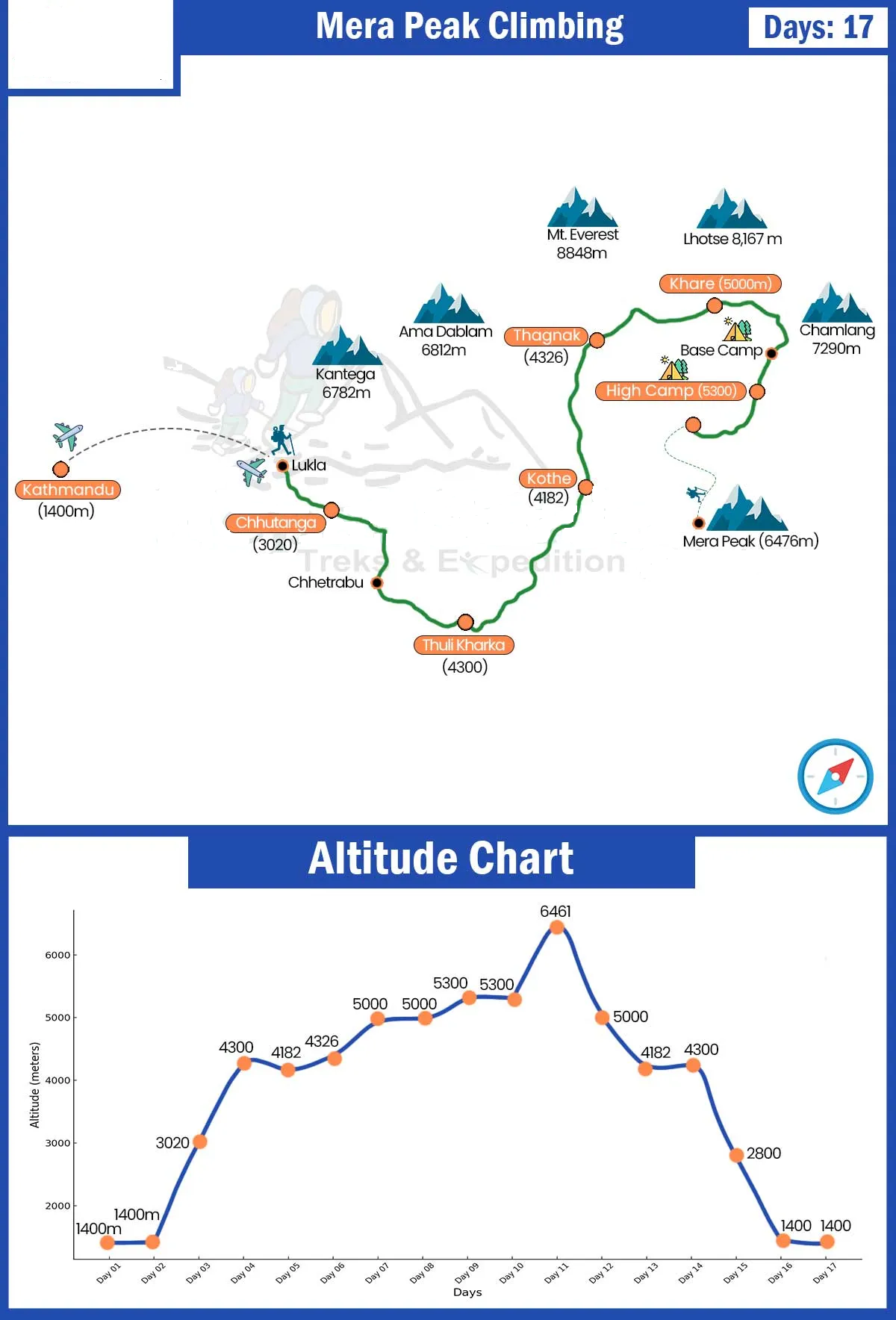
Starting your magnificent adventure from Lukla at 2,800 meters (9,186 meters) you will move along the ascending trails overcoming some of the major elevation jump points like Zatrawal Pass (4,600 meters), Tuli Kharka (4,300 meters), Khare (5,000), and the highest elevation point of the entire expedition, Mera Peak summit at 6,461 meters (21,197 feet).
Thus you have to prepare yourself properly to overcome the challenges at these significant altitudes and also stay on the lookout for any symptoms of altitude sickness.
Technical Section
Even though the Mera Peak expedition is considered a non-technical mountain due as it lacks strenuous climbing sections which demands a high level of mountaineering skills. There are still climbing sections on the mountain that require some technical skills, especially at the glacial segments and the dome near the summit.
However, just the basic level of mountaineering skills will be enough to overcome these segments, you will need to have a firm understanding of mountaineering equipment like jumars, ice axes, fixed rope, ice screws, etc.
Trekking Distance
The trekking distance in the Mera Peak expedition is another significant difficulty factor of the adventure. In Mera Peak Climbing you will cover an approximate distance of 125 km (78 miles), so you will be trekking for about 5- 6 hours on average during each day of your adventure.
It may not be that much vexing for the well-prepared and trained climbers but if you are new to the high-altitude adventure and haven’t done enough training it can be a hard factor to overcome. Furthermore, you will also be carrying your luggage within the rising altitude where even simple trekking can be really tiring.
After overcoming the moraine trails, you will switch to the climbing trails of ice and snow, although is not that technical, climbing in the alpine environment is not an easy feat.
Remoteness
The Himlayan region in Nepal is an underdeveloped region, due to the lack of proper transportation modes in the region, there is much infrastructural development. The services and amenities you receive in your trekking trail are of moderate level and as the transportation via mules, yaks, and porters can be costly, you also expect the prices to be relatively higher than the lower region.
Similarly, the technological advancement and the medical facilities along the route are limited. You will not be able to enjoy the basic free electricity and internet amenities during your stay at the teahouses. Also, due to the lack of proper medical facilities along the trail, the only rescue option in the case of an emergency is via helicopter flight.
Permits Required for Mera Peak Climbing
The permits are necessary because it helps to keep the record of trekkers and climbers. Similarly, the revenue collected through it is used for the regulation of trekkings and climbings and preservation of the natural environment. To climb Mera Peaks you need to obtain the following permits:
The Climbing Permit
The Mera Peak climbing permit is issued by the Nepal Mountaineering Association and it costs US$ 250 if you ascend the peak in spring. Similarly, if you plan to summit it in autumn the cost of permit is US$ 125. In the winter and summer seasons, the permit costs US$ 70. You will need this permit for both of the routes of Mera Peak.
Local Area Permits: The local area permit is required for Mera Peak climbing and it
costs Rs. 2000 (US$ 15).Sagarmatha National Park Permit: The cost of Sagarmatha National Park permit is Rs. 3000 (US$22.31)
Training and Preparation You Should Consider
The average recommended period for high-altitude adventures in the Himalayas is 4- 6 weeks. However as the Mera Peak expedition is a combination of both trekking and climbing, you are recommended to prepare for it at least 4- 6 months prior to the adventure.
You need to mostly focus on strength and endurance training as the Mera Peak Climbing is a physically demanding exploration. The cardiovascular and mental preparation are some other aspects that you have to train for a more comfortable and enjoyable experience.
Mental Preparation
Although most climbers make the mistake of overlooking the mental preparation factor, you shouldn’t underestimate it as how determined and prepared you are significantly affects the success rate.
Mountain Views during Mera Peak Climbing
The journey to Mera Peak is scenic and your eyes will be blessed by the stunning views of the mountains throughout the journey. In the initial part of the journey, you will be trekking through the beautiful pathways and mesmerizing views of Kongde Ri, Numbur Himal, Karyolang peak, Mera Peak and Kusum Kanguru can be seen.
Similarly, you can witness breathtaking views of majestic mountains like Mount Everest (8848.86 m), Makalu (8485 m), Kanchenjunga (8586 m), Cho Oyu (8188 m), Lhotse (8516 m), Nuptse(7861 m) , Ama Dablam (6812 m), Baruntse (7162 m), Kangtega (6782 m) and Chamlang (7319 m) form summit of Mera Peak.
Altitude Sickness and Preventive Measures
Altitude Sickness is one of the main concerns during high altitude adventures like Trekking and Climbing. During Mera Peak climbing the altitude gain is significant as you will traverse across different altitude zones over 5000 meters.
The elevation of Mera High Camp is 5,300 meters and Central Mera Peak summit is 6,461 meters. In order to ensure successful ascent, it is essential to get accustomed to high altitudes. It is crucial to be aware of altitude sickness symptoms. The symptoms of Altitude sickness are:
Headache
Nausea and Vomiting
Exhaustion
Blocked Ears
Shortness of breath
Lack of appetite
Having difficulties to sleep
Some preventive measures you can take to minimize the risk of altitude sickness are:
Ascend slowly ; do not overexert yourself.
Stay hydrated throughout the journey.
Incorporate acclimatization days during the journey to adjust in the high altitudes.
There are preventive medications that are available which helps to prevent the symptoms, you can consult with your doctor before taking it.
What to Expect During Mera Peak Climbing?
Mera Peak Climbing is the adventure of a lifetime that rewards you with incredible experiences that you will cherish forever. We will make best arrangements for you so that you can only focus on climbing being stress free. As you arrive in Kathmandu, we will receive you, hold a meet and greet session and drop you at the airport in a comfortable private hotel. We will arrange your accommodation in the best hotel in Kathmandu.
You will embark on the journey with professional guides who will accompany you throughout the journey and will help you in navigation. During the initial days of the journey, your overnight stay will be at tea houses or lodges, and once you make it to Mera High Camp, our team will set up a tented camp, ensuring you a comfortable stay. The full board meals (Breakfast, Lunch and Dinner) are covered within the Mera Peak Climbing Package.
In our 17 days itinerary, the first two days you will spend in Kathmandu and then take a flight to Lukla on the third day. You will start the trek from Lukla and traverse through the places like Chhutang, Tuli Kharka, Kothe, Thangnak, and Khare. In these places, you will stay in lodges. The beautiful views of snowy peaks can be seen during trekking.
You will cross the exhilarating Zatrawal Pass, where alluring mountain panoramas can be seen. Trekking in the diverse terrains, which are a mix of rocky, forested, and rugged sections, will make your journey exhilarating and intriguing. Similarly, after you make it to Mera Peak Base Camp you will trek to high camp and stay at the camp. Our team will set the camp and prepare the warm meals for you.
On the day of the summit, our professional guide will provide you with valuable guidance for the entire time. Upon making it to the summit you will be blessed with enchanting views of Everest, Ama Dablam, Lhotse, Makalu and many other majestic mountains.
During the journey, you can expect warm hospitality from the locals, beautiful sceneries, and guidance from the best team. After the Mera Peak ascent, we will hold a farewell dinner program. On this day, we will hear about your experiences during the journey and ask for your feedback so that we can provide even better services in the coming days.
Why is Travel Insurance Essential for Mera Peak Climbing?
Travel Insurance is crucial during high altitude adventures. Trekking and expeditions are adventurous and exciting but there are also certain risks that come along with it.
During Mera Peak Climbing you will be traversing across diverse terrains for several days. Having travel insurance helps you stay financially protected from such risks. Selecting policy which provides coverage for helicopter evacuation during emergencies is important during high altitude trekking and peak climbing.
Travel insurance has a policy that provides coverage for medical expenses because of illness or injuries during the journey. In addition it also provides coverage for lost or stolen baggage and trip interruption, delays or cancellation. So, it is very important to get travel insurance for peak climbing.
Some Tips for Mera Peak Climbing
Research
Doing research is important before heading for any high altitude adventures. When you research the physical demands of any climb then you can make an informed decision. You will know about cost, training and preparation and all the essentials that are required for trekking and plan accordingly. The best way to research is looking for information online. Similarly, you can also inquire directly to the travel agencies that organize trekking and climbing.
Pack all Essentials
It is important to pack all the essentials when you are going for any high altitude adventures. As you will be traversing in the different higher zones you need to have essentials that are required. When you are well equipped with all the important items you will have a convenient journey. You can maintain hygiene and stay fresh throughout the trip when you pack wisely.
The higher regions are colder and you need to be warmly dressed and make sure to pack the warm clothes. Furthermore you must ensure that you have included all the personal climbing gears in your baggage.
Take care of hydration and nutrition
You should take care of your hydration level and diet when you are venturing into high altitude adventures like trekking or climbing. As during the journey you will cover long distances on foot and it is crucial to be properly hydrated and have nutritious food.
For a successful ascend a good level of strength and stamina is required. When you are well hydrated and have balanced diet you will stay energized and stay healthy throughout the journey which eventually helps you to make it to summit successfully.
Follow guides advice
It is important to follow the guides advice during climbing and trekking. The guides are licensed and are well experienced in leading trekking and expeditions. They are familiar with each and every part of the route and are proficient in navigation.
Their valuable advice will help you to traverse successfully in challenging sections of the trail. From leading the journey to taking care of arrangements on the basis of your needs and requirements the guides will look after all. So, it is crucial that you communicate with them and follow their advice for a successful ascent.
Select the Pleasant Time
When you select the peak season which is recommended by many people then you can get excellent views and also get to trek in favorable environment. Similarly, traversing when the weather is pleasant and favorable makes traversing easier.
You will not miss any special attractions as when weather conditions are stable, there won’t be any delays or interruptions to the journey. When you traverse during off-season conditions, You can trek and climb peaks in good weather conditions and also complete the journey as smoothly as you have intended.
Check Weather Forecasts
The weather has a great impact when you are partake in adventures like trekking and climbing. So, it is important to check weather forecast. When weather conditions do not look favorable it is highly advisable to adjust your itinerary accordingly.
When weather conditions are adverse you will face difficulties in navigation. In addition there is also risk of falls and injuries. So, it is very crucial to check weather forecasts and take advice from guides before heading out for trekking or climbing.
Be Flexible with Your Itinerary
You should be flexible with your itinerary. As the weather in the mountains can change in short duration, there may be a situation when you have to change the itinerary. In such conditions, it is highly recommended that you be ready for any modifications.
Sometimes, itinerary changes are necessary to stay safe, especially in adverse weather conditions. So, it is important to be flexible in changing the itinerary in such situations.
Why Choose Us for Mera Peak Climbing?
Your safety is our top priority, and we focus on providing you with personalized service.
We ensure a memorable and exciting adventure, making all arrangements of all logistics essential during the journey.
The cost of all important climbing gears are included within the package.
We follow the principles of eco-tourism. We promote sustainable tourism activities for the preservation of the natural environment and cultural heritage and for the betterment of the local economy.
We design itineraries based on your request by considering your timeframe, experience, and preferences.
Our guides are well experienced and will assist you the entire time, providing their insights for navigation.
Our Mera Peak Climbing package covers the cost of first aid, all required permits, and staff’s insurance, wages, and clothing.
Things you should know?
For trekkers who haven’t got mountaineering experience.
It requires basic ice axe and crampon skills.
It’s a trekking peak rather than climbing, non-technical climbers can also achieve it.
Mera Peak Summit (6461m), Nepal Guide Treksguarantee you for 98% success rate.
You can get a basic level of Teahouse during trekking part and Tented Camp during climbing.
Mera Peak does not need to fix rope, but be smart bring 50 meters main rope.
If you don’t have any equipment for climbing, Nepal Guide Treks provides you climbing gear.
For mountaineering in Nepal, Please bring your insurance coverage for trekking/Mountaineering.
How Challenging is Climb?
Mera Peak is the highest trekking peak in Nepal and a top choice among mountaineering beginners who want to gain some experience in the snow-clad slopes before taking on the highest peaks in the world. Mera Peak expedition is considered to be a non-technical climbing and the climbers scale on pretty much a straightforward climbing route.
Although Mera Peak climbing is considered a ‘non-technical climb’ it has been labeled as a ‘moderately difficult’ expedition. Mera Peak expedition has been graded as ‘Alpine Grade PD’ in the Alpine grading system, which indicates that there are some challenging and technical segments on the mountain.
Mera Peak Climbing was previously graded as an ‘Alpine Grade F’ grading, as it was just a straightforward climb to the summit. However, due to changes in the glacial segment and the technical segments that climbers have to overcome during the summit push, its difficulty level was upgraded.
There is a snowy dome 40- 50 meters before the summit that climbers have to overcome using jumars on the fixed rope during the Mera Peak expedition. That’s the only challenging part of this expedition that is specifically designed for the budding mountaineers.
As the Mera Peak expedition is a fully guided adventure, our expert mountaineering guides and crew members will take excellent care of you prioritizing the safety factors. So, you don’t have to worry about anything while climbing, just enjoy the view and relish the memories that are gonna last a lifetime.
Mera Peak Itinerary
Mera Peak climbing with the Nepal Guide Treks and Expedition team lasts 17 eventful days. This expedition starts by leaving the historic city and the capital of Nepal, Kathmandu for Lukla. We will arrive at Lukla after 35 minutes of scenic air travel from Kathmandu. Soon after arriving in Lukla, you will trek up to Chhuthang on the first day of the tour.
Then you will leave for Thuli Kharka(4300m) via a captivating Zatrawala Pass. After an overnight stay in the Thuli Kharka, your trek runs towards Kothe.From Kothe, you will leave at early morning to reach Thangnak(4326m). After making up to Thangnak and spending a night there, your next destination will be Khare.
The land of Khare provides the glimpses of soon to be climbed, Mera Peak. You will reach Khare for an overnight stay, but there will be one more day in the Khare for acclimatization. This means you will spend two nights staying in Khare before heading for Mera Base Camp(5300m). Your Himalayan trail has started from the base camp of Mera peak, and it will move to Mera High Camp(5,700m) and then to the top of Mera Peak(6,476m).
After the successful summit of Mera peak, you will descend back to the Khare for the night stay on the very day. You will then retrace the earlier trails to return Lukla. On this stretch, you will cross Khare, Kothe, Thuli Kharka, and Lukla in several days. Your last night in the Khumbu region will be at Lukla just one-night before the Kathmandu flight.
Thereafter, you will fly one last time through the Khumbu’s skies to trace back Kathmandu. Soon after landing in Kathmandu, your Mera Peak Climbing expedition with us will end.
Included in the price
- All transfers as per the program (airport pick-up and drop-off, transfer on the day of departure to Lukla)
- Accommodation in Kathmandu in a hotel (3 nights, double occupancy with breakfast)
- Guide services throughout the trek and climb
- Accommodation in lodges during the trek
- Organization and equipment of the high camp, accommodation in the high camp (5,790 m)
- Depending on the number of people, a second guide for the summit attempt
- Food and gas for cooking in the high camp (5,790 m)
- Meals in the high camp . Permits
- Payment of all official fees along the route (for setting up camp, for the group, for garbage)
- NMA certificate of successful ascent of Mera Peak (only in case of successful ascent)
Not included in the price
- International flight to Kathmandu and back
- Airport fees when departing from Kathmandu to Lukla and from Lukla to Kathmandu ($2-5. Sometimes they are canceled)
- Additional baggage over 25 kg (flight and porters)
- Visa to Nepal, at Kathmandu airport ($50 for 16-30 days), issued upon arrival at Kathmandu airport
- Lunches and dinners in Kathmandu
- Personal climbing equipment and clothing
- ATTENTION!!! MEALS DURING THE TREK ARE NOT INCLUDED! Meals on the route are estimated at $30-$50 per day.
- Mountaineering insurance.
- Bottled water, showers, and battery charging during the trek.
- Tips for porters (minimum $50).
- Guide bonus for successful ascent (minimum $100)
- ATTENTION!!! DIFFICULT WEATHER CONDITIONS ARE LIKELY AT LUKLA AIRPORT. IN THIS CONNECTION, FLIGHTS MAY BE CANCELLED. AN ALTERNATIVE OPTION IS TO FLY BY HELICOPTER (from $600 per person)
- Porter 3,000 rupees ($20-25) per day carries up to 30 kg, usually one porter is enough for two people
Gallery