ARARAT Mount -5165(5137) m
Price From $850 per guest (group of 10 person) The price also includes an optional acclimatisation climb up Mount Aragats two days before the departure to Mount Ararat.
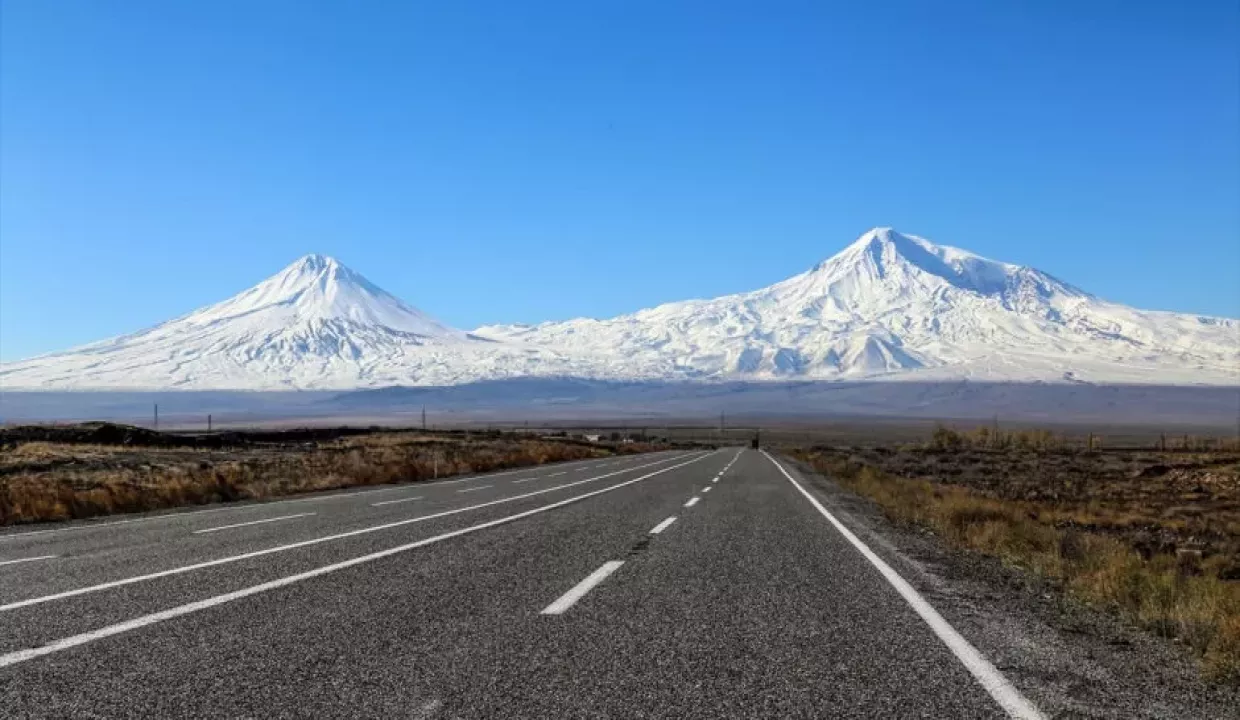
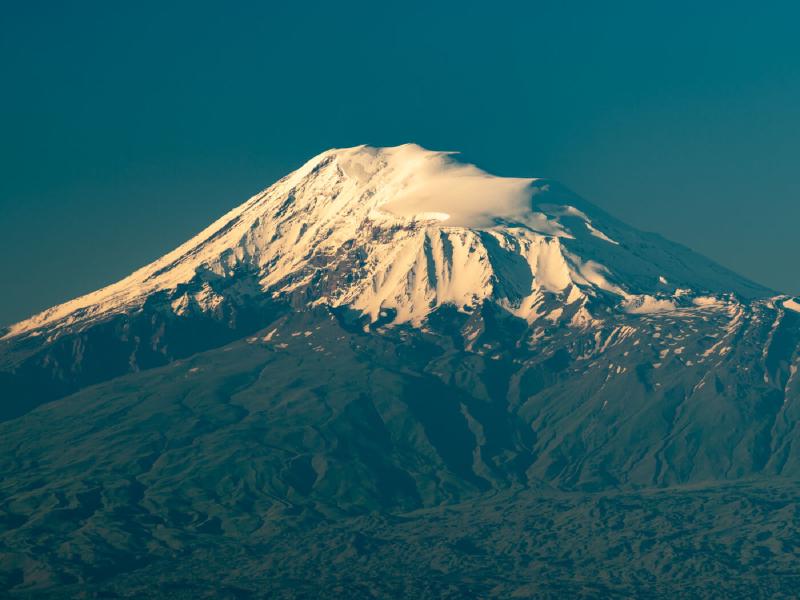
Ararat is the highest point of the Armenian highlands. This snow-capped dormant volcanic cone is located in the province of Igdir, 16 km west of Iran and on the border with Armenia. Unfortunately, the centuries-old Armenian symbol of holiness Ararat, passed under the protectorate of Turkey in 1921 at the whim and collusion of the Soviet authorities.
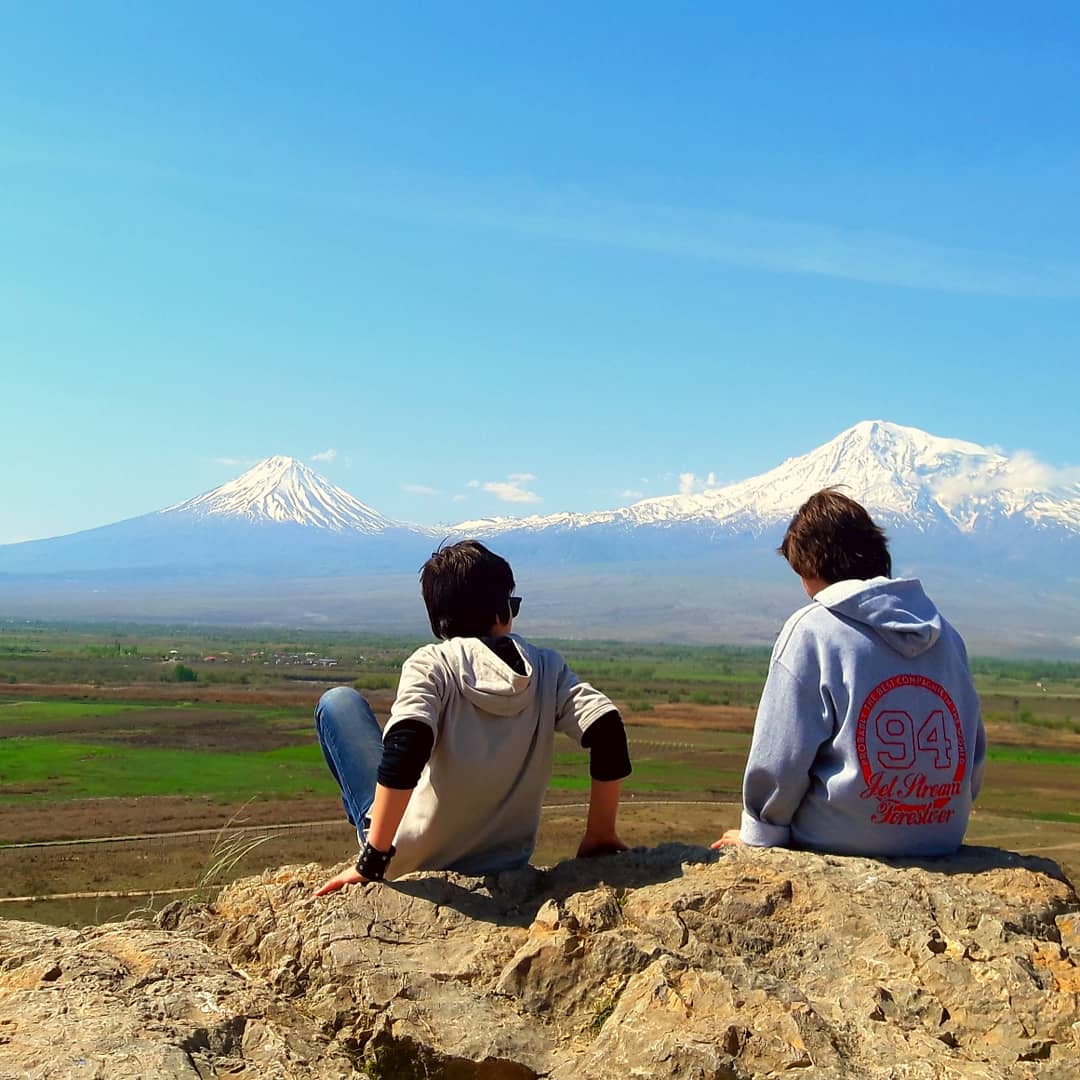
A smaller cone of 3,896 m (12,782 ft), Little Ararat, rises from the same base, southeast of the main peak. A lava plateau extends between the two peaks. The last activity on the mountain was a major earthquake in July 1840, centered around the Akori Gorge, a north-east facing chasm that falls 1,825 meters (6,000 feet) from the top of the mountain.
The traditional Armenian name for Ararat is Masis ( Մասիս). According to historians, it goes back to the name of the sacred mountain of Akkadian mythology Mašu - “twin”, which characterizes the two peaks of the mountain. Such an explanation correlates with the etymology of the name of the country Erkuaḫi (from the armenian erku - “two”), which was located in the region of Mount Ararat and was part of the ancient Armenian community Etiuni during the Urartu period.
Names: In many languages, except Kurdish and Turkish, the mountain is referred to as Ararat. In Armenian mythology, this mountain has always been the home of the gods of the Armenian sacred pantheon. But later, in Abrahamic religions, Ararat is the place where Noah moored the ark after the great flood. The Turks call it Agri Dagi (Mountain of Pain) and the Kurds call it ciyaye Agiri (Mountain of Fire), probably due to its volcanic activity.
History:
The first ascent to the Great Ararat was made on September 27, 1829 by Johann Friedrich Parrott, a professor at the University of Dorpat, accompanied by the following group: Khachatur Abovyan, an interpreter and guide, two soldiers - Alexei Zdorovenko and Matvey Chalpanov, as well as two peasants from the village of Akori - Hovhannes Ayvazyan and Murad Poghosyan
The mythology and mysteries of Ararat:
Mount Ararat has been the subject of attempts to find Noah’s ark for many years.In ancient times, climbing was considered a deed against God. Researchers have not stopped trying to find one of the most mysterious relics.
One of the first who undertook a search for Noah’s Ark was James of Nisby, who lived back in the 4th century. According to the 5th century Armenian historian Phaustos Byuzand (Byzantine), Jacob asked God to show him Noah’s Ark on Mount Ararat. When he “was already near the summit, he fell into a deep sleep, and in a dream an angel appeared to him and said: “Jacob, God has heard your prayers and fulfilled your request: what is at your feet is part of the ark. Take it and do not try to go higher, it pleases God.” Jacob woke up and saw at 4,350 meters, a piece of wood with traces of resin that could be evidence of Noah’s ark. He took it and set off with his companions on the return journey. This piece of wood to this day is kept in the Etchmiadzin Cathedral and a piece of Noah’s ark was given to Catherine II in 1768 as a sign of friendship between the two nations.
In the 1950s, the Frenchman De Navarre claimed to have found a piece of wood from the ark, but subsequent scientific dating showed it to be too recent.
Another famous ark finder on Mount Ararat was astronaut James Irwin, who set foot on the moon in 1971.
The story of Noah’s ark on Mount Ararat is an important foundation for the Christian world as well as for Judaism and even Islam.
Another mountain behind:
Ararat (5137m) is “one of the must-see peaks” in the climbers' piggy bank. It is considered to be the perfect starting point for getting acquainted with the High Mountains, as no technical knowledge is required for the ascent. Only willpower and confidence that you can and want to reach the summit.
For a long time, the Bible Mountain was closed. Then there were wars and exorbitant prices… But now we are glad to invite you to Ararat! It’s safe and not expensive!
A beautiful route, instructors with high altitude experience in the mountains.
There is no reason for refusing! You’ll be proud to tell about such a vacation and remember it with kindness.
Ascent programme:
Day 1: Transfer to the foot of Mount Ararat
After meeting at the designated location and checking our equipment and gear, we are ready to embark on our exciting journey.
We leave Yerevan and head towards the city of Gyumri. After completing the formalities at the Bavra border crossing point, we enter Georgia. After travelling through Georgia, we will pass through another checkpoint on the border with Turkey . Along the way, the group will have the opportunity to stop for lunch wherever they wish. Our final destination for today is the city of Dogubayazet. If the group is interested, we can stop in the city of a thousand and one churches, Ani, for an excursion.
We will check into a hotel and take a short walk. In the evening, we will have dinner, during which the guide will answer questions from tourists and talk about the travel plan. Dinner will give everyone a chance to get to know each other better. Overnight stay at a hotel in Bayazet.
Day 2: Start of the ascent to an altitude of 3200 metres.
In the morning, after breakfast, a car/minibus will take us to the foot of Mount Ararat, to the starting point of the climb, the village of Eli, at an altitude of 2,200 metres. The journey from the city to the starting point takes about 1 hour. Half of the road is covered with gravel. Here we will take our light backpacks and begin our hike to the camp at an altitude of 3200 m. Large backpacks, camping equipment and luggage will be delivered to the camp by horses. The length and duration of today’s route is approximately 6-7 km and will take a total of 4-5 hours of walking. Lunch boxes and water will be provided for lunch in the field, and dinner with hot dishes and tea, carefully prepared by the cook, will be provided at the camp. Overnight stay in tents at the 3200 m camp.
The trek is challenging and necessary to get the body in shape.
👣 Trek 6 km. ⏳ Duration 5 hours. ↑ Elevation gain 1000 metres.
Day 3: Hike to the assault camp
In the morning, after waking up, we will stretch our muscles, which are sore from the first day of the trek, before breakfast. After a delicious breakfast, we will begin the second day of the trek to the camp at an altitude of 4,200 metres. We will again take water, lunch boxes and other necessary items in our small backpacks. Heavy items will be transported to the camp by horses.
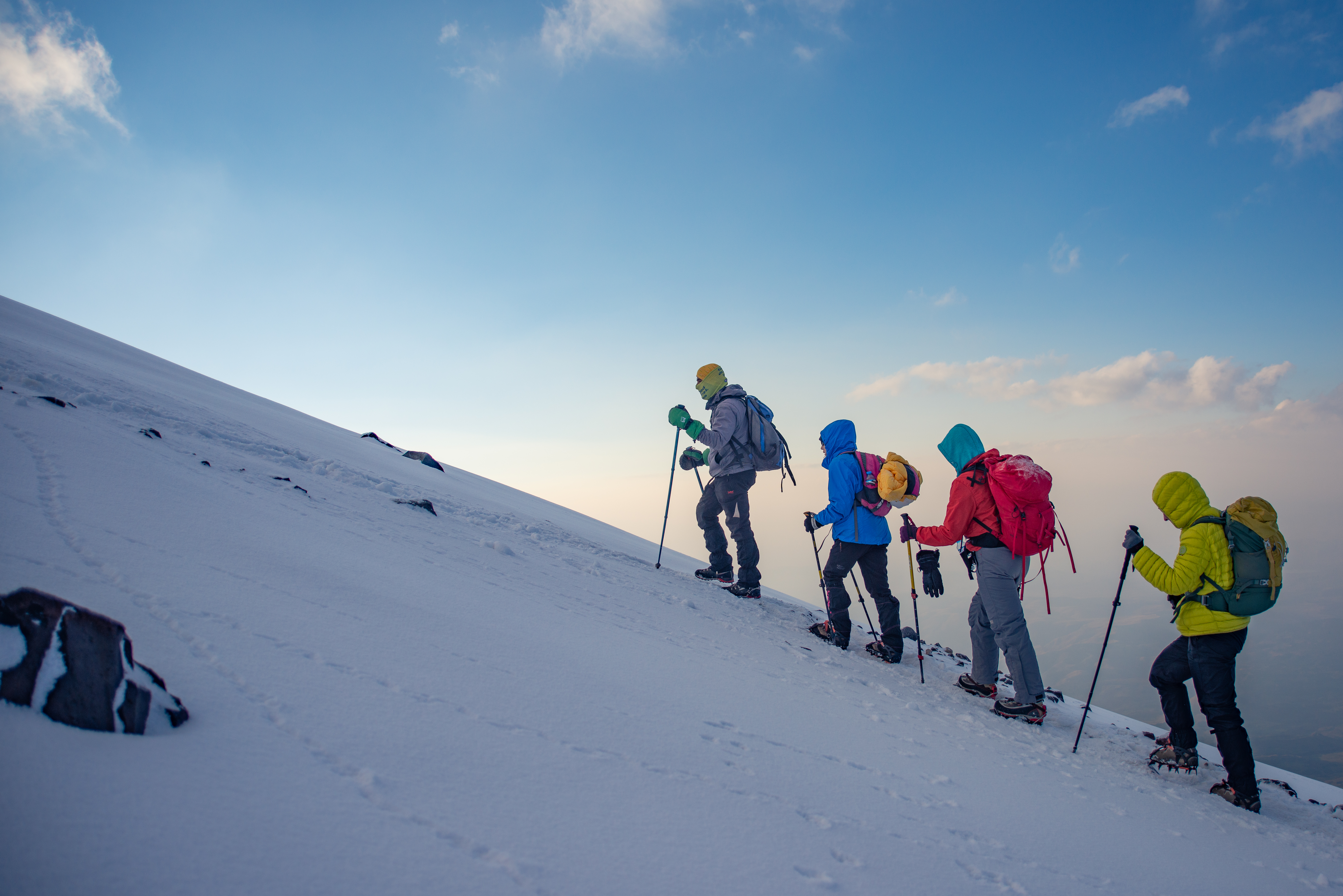
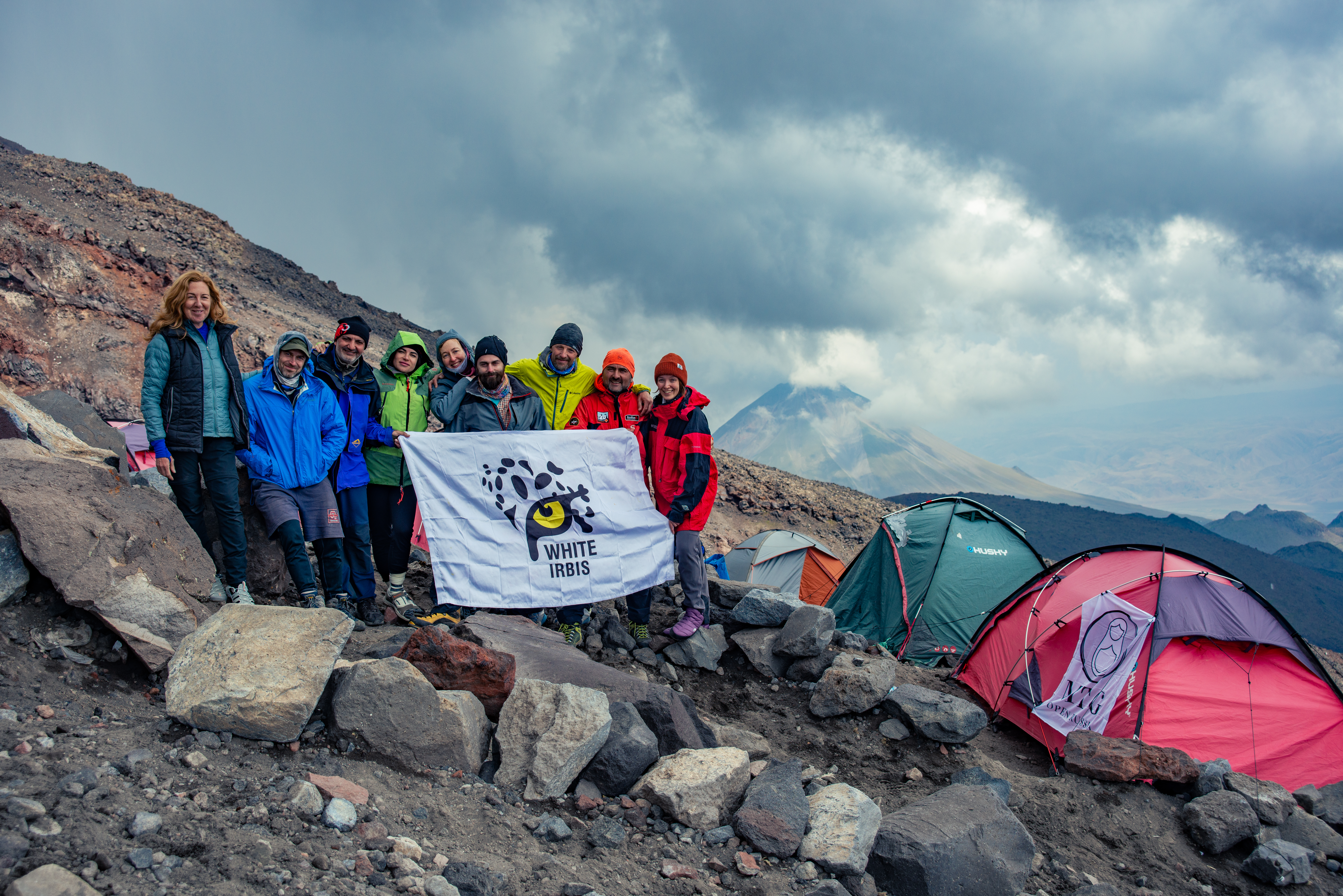
The route will be steeper and more tiring. We will climb to the assault camp, have a snack, and chat with tourists who have already been to the summit. We will arrive at the camp in the afternoon. We will set up camp at the assault camp and begin preparing our equipment. After an early dinner, the instructor will explain the safety rules, check that you have packed everything in your backpacks, and, if necessary, issue crampons and teach you how to use them. We will also do an acclimatisation hike, gaining 200-300 m in altitude. We will go to bed very early.
The length and duration of the route on the second day will be approximately 5-6 km and will take up to 5-6 hours.
👣 5 km. ⏳ 6 hours. ↑/↓ 950 m.
Day 4: Sturm Day
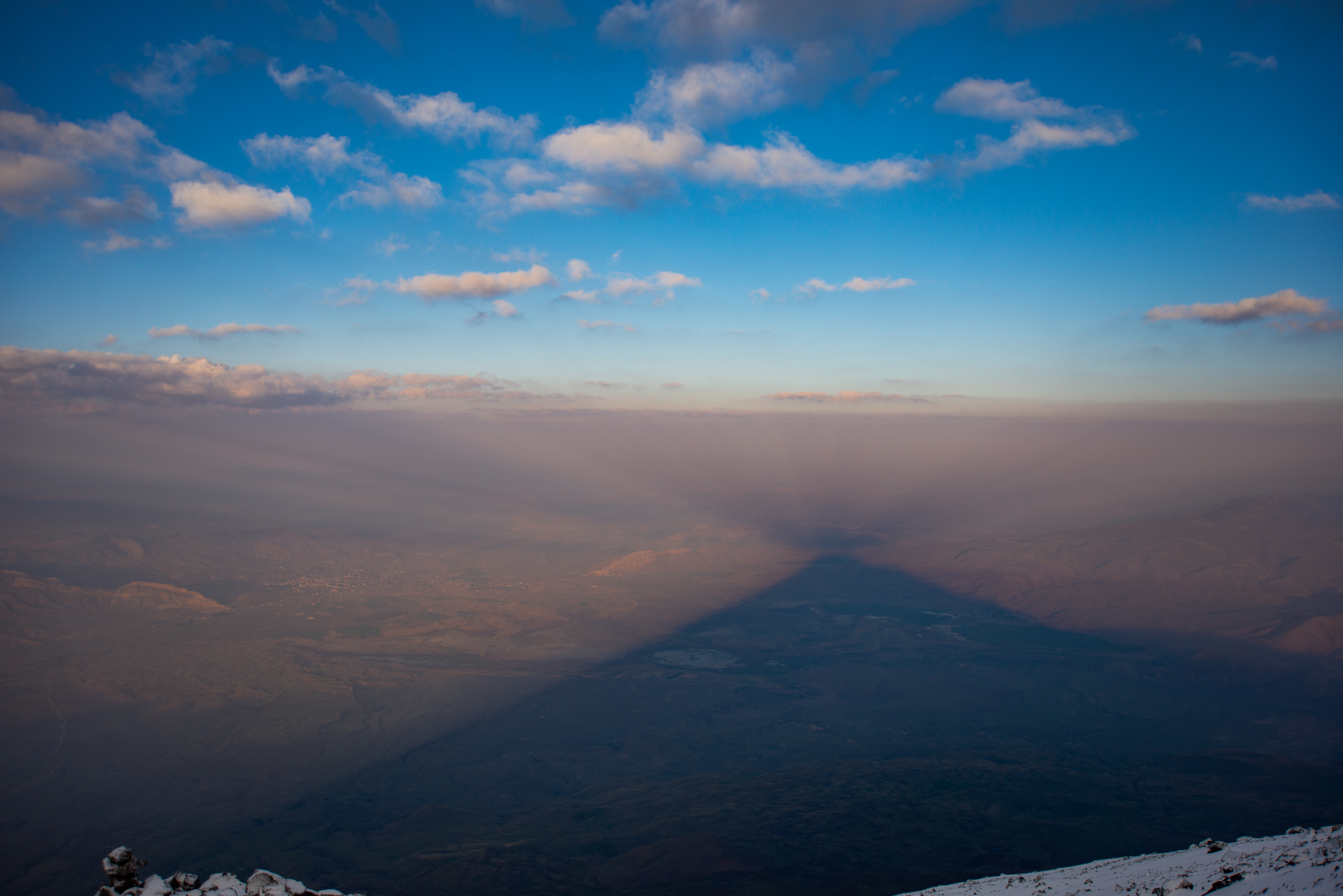
We wake up at midnight, get dressed, have a light breakfast, turn on our torches and set off on the trail. Along the way, we will meet the dawn and see the shadow of the volcano stretching to the horizon.
Most of our belongings will remain at the camp; we will only take small backpacks with the necessary items: water, snacks, crampons, a phone, batteries, etc. The route will be even steeper and more tiring! Closer to the summit, we will have to walk on snow wearing crampons, as the snow is often frozen and slippery. For safety reasons, under no circumstances should you deviate from the route or leave the guide.
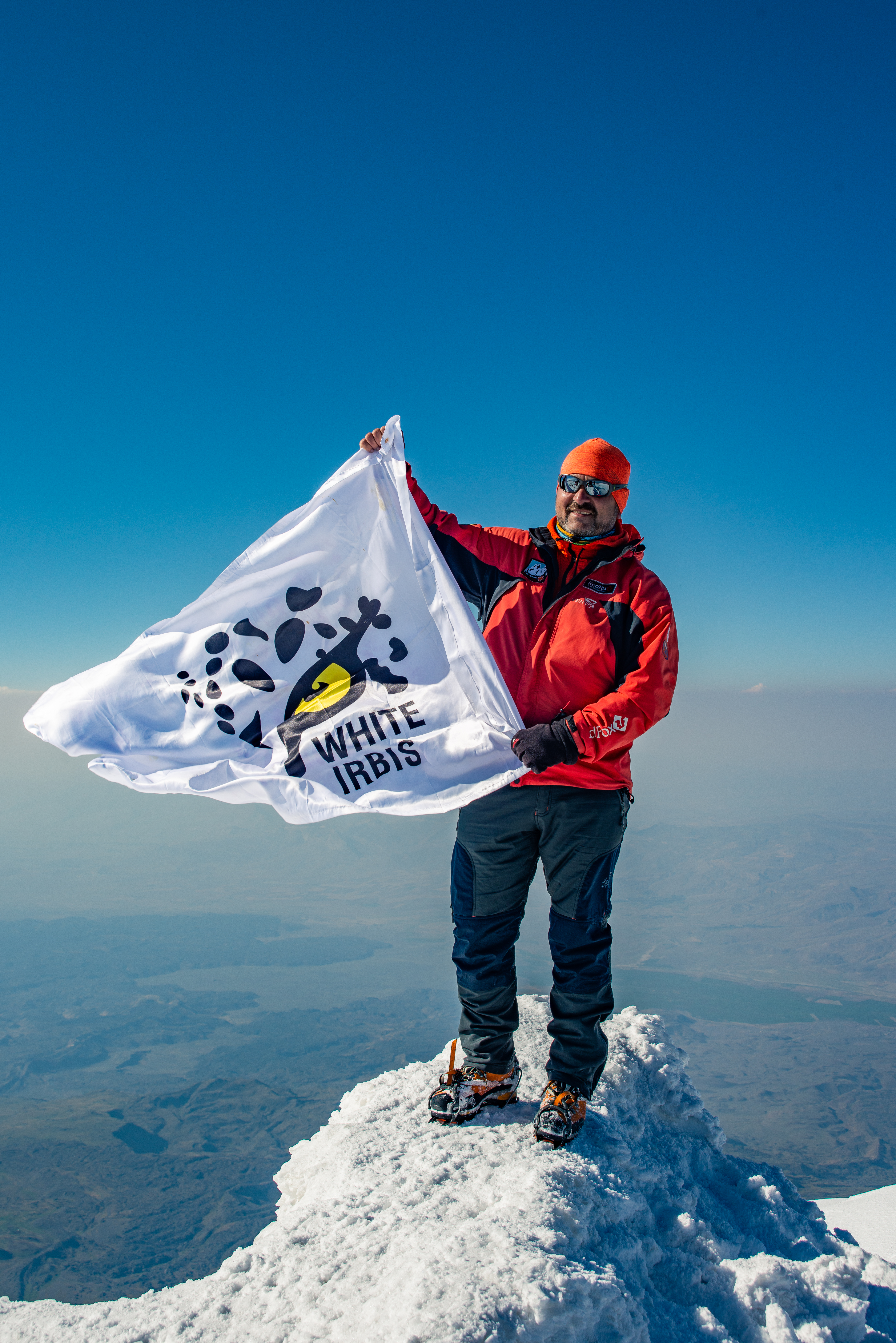
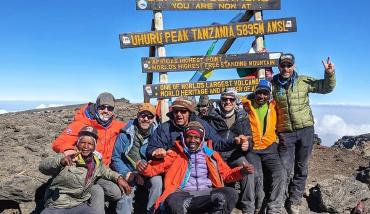
The loose snow gives way to huge rocks, and at the end, the glacier begins. In 5-6 hours, we will reach our goal. The summit. According to modern measurements, the height of Mount Ararat is 5,137 m, previously it was considered to be 5,165 m. We will stay at the summit of Ararat for 30-40 minutes. Photos, summit euphoria and sparkle in our eyes. The endless expanses of the Armenian Highlands will open up before us. In clear weather, you can even see Yerevan from here! It feels like we are on top of the world.
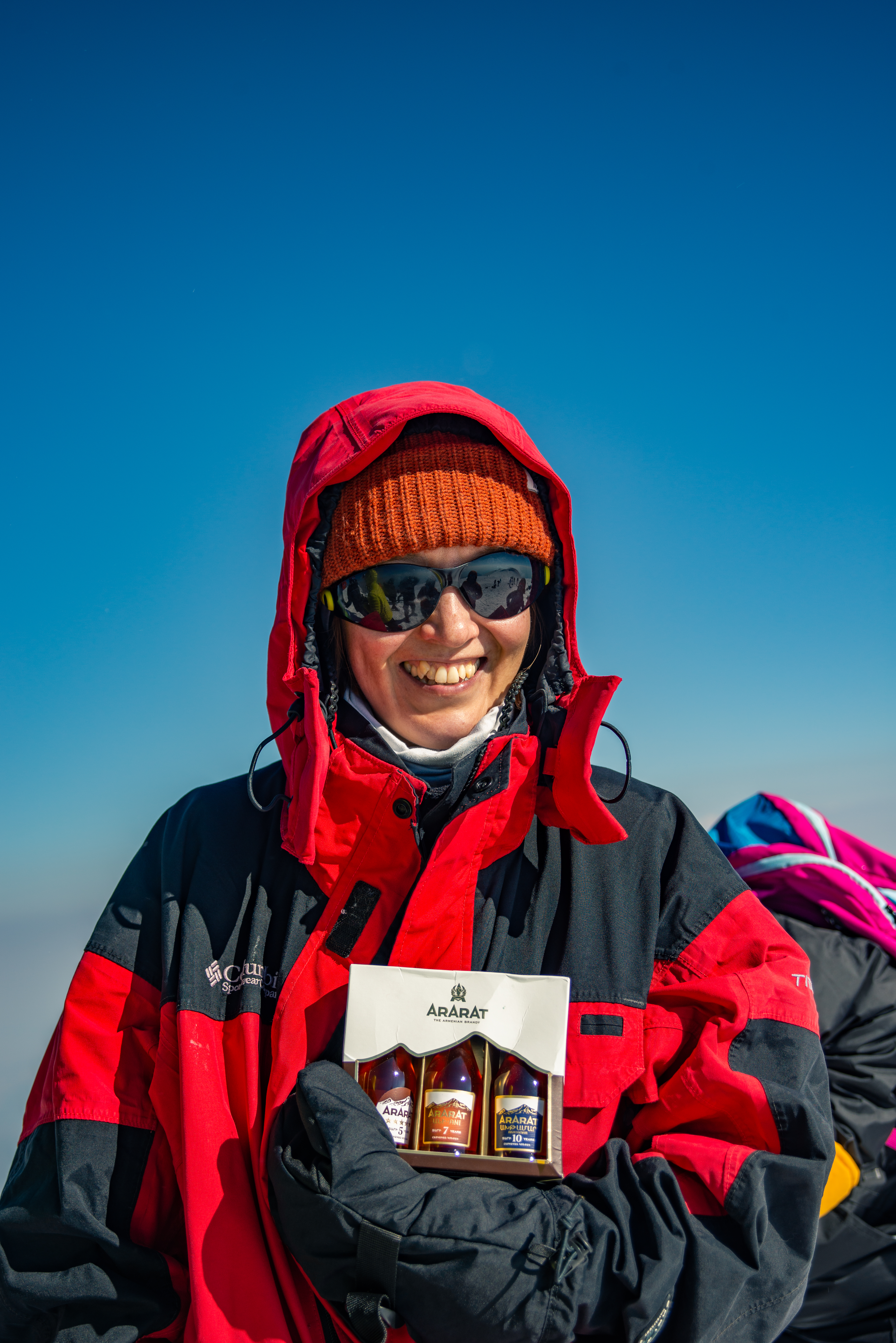
We descend to the tents, have lunch, get ready and begin the descent to Camp 1. The transition will be difficult - along steep slopes with a significant drop in altitude, so be prepared for this. In the camp, altitude sickness will subside a little and we will be able to celebrate, drink Ararat cognac for the summit, rest, have dinner and get some sleep. Night in camp -1.
Day 5: Descent to Dogubayazit
We descend to the village of Eli and transport takes us back to civilisation. A warm shower, a hotel…)) If you wish, we can go on an excursion to the ancient fortress of Bayazet and visit the palace of Ishak Pasha. In the evening, we will have a feast, taste local delicacies, share our impressions, exchange contacts and photos. And, full of new impressions, we will drift off into the world of dreams.
👣 6 km. ↓ 1150 m
However, if you wish, you can go down early in the morning and organise a trip to Lake Van. Van is practically no different from the sea: huge, crystal clear and salty. Swimming there is a real pleasure! On the lake, we will visit Akhtamar Island, where an ancient Armenian shrine, the Cathedral of the Holy Cross, was built. We will definitely take a boat and go on an interesting excursion on the waters of the lake itself. Descendants of Armenians still live on the shores of the lake, as they did in ancient times. We will buy delicious fresh fish from them, which they will cook right there on the spot. In short, today we will relax to the fullest :)
Day 6: Back home
After breakfast, we will head towards our home. From Bayazet, we will travel towards Igdir and the town of Tuzluja/Kohb. If the group wishes, we can take a walk around Kars or Ani. From there, we will travel to the Turkish-Georgian border. We will enter Georgia, then travel through the Javakhk region to the Georgian-Armenian border. Upon arriving in Yerevan, we will bring with us some of the most vivid impressions of our lives…
Alas, it is time to say goodbye. At this crossroads of life, our paths will diverge. But the friendship that arose in the mountains will not be destroyed by years and miles. We will forever remember our adventure and the company that shared it with us.
Until we meet again in the mountains!
Transportation according to the program
Guide service
Accommodation and camping equipment rental (tents)
Meals on the mountain
Drinks on the mountain
Horses for carrying the luggage
Insurance
Personal equipment
Personal medications
Meals outside the mountain
Transfer from the airport
Tips
Gallery